2010年12月22日 星期三

The eagles of Danshui and more

Contributed by Sam Wu

There are 400-450 species of birds in Taiwan that include those migrating from northern Asia either arriving in Taiwan for the winter or stopping over, on their way to, e.g., Indonesia.

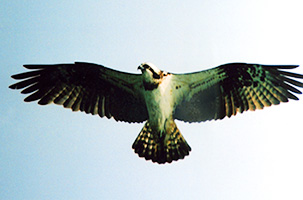
There was a time when the sky above Danshui River was teeming with eagles hunting for fish [four of the most numerous: Chinese goshawk, gray-faced buzzard eagle, Formosan crested goshawk, and serpent eagle]. Now, with their winter nesting sites crowded out by humans in 觀音山 area, you are lucky to spot one or two on a good day.

In the wetlands and forests, however, a few other species have apparently survived and done well:

[Above and below: 鷺鷥white Egret, commonly sighted in riversides and rice paddies, strolling in lady-like grace; there are 6 species of egrets in Taiwan]
[Above and below: 紅臉水雞Common Moorhen found in 紅樹林, known to fuss over their broods]
[Below: 白頭翁 Chinese Bulbul - noisy residents of the woods]
[Above: a Red-faced 番 duck/Muscovy, known to chase after kids]

[Above: a 斑點鶇 Dusky Thrush, most likely from E Siberia]

[Above: a 白腹鶇 Pale Thrush, another visitor from Northeast Asia]

[Above: a 夜鷺 Night Heron - hunts at night often at fish farms much to the chagrin of the farmers]

[Above: a 藍磯鶇 Blue Rock-thrush and below: a very rare migratory 藍尾鴝Red-flanked Bluetail known as "rooftop violinist" for its trilling songs]
[Below: a 樹鵲 Himalayan Tree Pie - usually seen in groups, large and loud residents of parks in Taipei]
[Above: a 爪哇八哥White-vented Myna, this one in a bamboo bush in Danshui; and below: a 五色鳥Muller's Barbet, a loner with feathers of 5 different colors]
[Above: a 翠鳥Kingfisher, aka a flying jewel; and below: a 黃尾鴝Daurian Redstart, another visitor from the north]
The good news is, with planned conservation in Danshui, Guan-du and Taipei, these beautiful birds seem to be making a comeback. We hope the magnificent eagles of 觀音山, all 10 species of them do as well.

2010年12月17日 星期五

Koxinga's sister (Part 1): Ursola de Bargas

[Koxinga's birthplace in 平戶Hirado in Nagasaki - known as 兒誕石]

According to the writing of Franciscan missionary to China, Fr Antonio de Santa Maria Caballelo (1602-1669), 鄭芝龍Cheng Zhi-lung's daughter married one of the sons of Mr Manuel Bello, a Portuguese resident of Macau. Another Franciscan, Fr Bonaventura Ibanez (1610-1691) also reported that Bello and his son Antonio Rodrigues, both of whom Macau-born Portuguese came to call on him in 安海An-Hai. And during the visit, Rodrigues had described his wedding to Lord Cheng's daughter, Ursola de Bargas, in Macau.

This is the little known chapter of the Cheng family history. Indeed, Ursola was Koxinga's sister from the same Japanese mother, Lady Weng [翁夫人 - 田川松Takawa Matsu]. Her Chinese/Japanese name remains unknown.

鄭芝龍 had never forgotten this branch of his family. In May, 1630, after several unsuccessful attempts through emissaries, 鄭芝龍 finally sent 鄭芝燕 his own brother to hand-carry a letter to the Daimyo of Nakasaki asking that his family members be released. In the Tokukawa Period, however, no Japanese citizens were allowed to emigrate. Outraged, Lord Cheng dispatched a fleet of 10 warships to Japan threatening retaliation. After some negotiation, only the then 7-year-old Koxinga was let go. Lady Weng stayed behind to take care of her second son 田川七左衛門, then barely one year old. Apparently, a daughter was also left behind with the mother.

Perhaps to honor 鄭芝龍, his daughter was brought up a devout Christian [even though Lady Weng was not in this faith]. She arrived in Macau with other Christians in 1636 to escape the religious persecution then the rage in Japan. She was evidently quite well cared for by the Portuguese.

[The St Paul Cathedral in Macau built in 1582-1602, destroyed in 1835 by typhoon and fire]

Upon learning the arrival of his daughter in Macau, Lord Cheng demanded the custody which the citizens of Macau refused citing that Cheng (known in Macau as Nicholas Iquan) was no longer a practicing Christian and that his daughter, if returned to China, would be residing in a land with no churches. Lord Cheng initially threatened to bring 500-1,000 warships to attack Macau but relented later.

[Macau, ca 1640]

The father and daughter were finally united in 1646. This was because Lord Cheng, instead of taking hostages, had taken very good care the crew of a Portuguese ship that had sunk in his territory. In gratitude, the Portuguese in Macau decided not to block the re-union any longer. At the same time, Lord Cheng made a promise to his daughter that he'd build a church to accommodate her and other Christians. It was indeed built inside his 138-acre seaside compound in An-Hai in 晉江. This cathedral was decorated with icons and portraits of Jesus, Virgin Mary, and Christian saints complete with preaching and regular services. This was also where the two aforementioned Franciscans met up with Ursola and her husband Antonio Rodrigues.

After 鄭芝龍's surrender, the couple returned to Macau in 1655 when Koxinga decided to fight against the Qing and restore the Ming. He burned down the compound with everything in it to re-group in Amoy. It is known that Rodrigues became a sea captain at least until 1678.

For two long years, Mr Manuel Bello stayed with his in-law Lord Cheng when the latter was imprisoned by the Qing. For unknown reasons, Bello was spared the death sentence when Lord Cheng together with 10 immediate family members were executed in 1661.


2010年12月11日 星期六

The rest of Danshui

Besides the hustle and bustle of the 老街Old Street, there are many tourist attractions in Danshui, e.g., the Little White House, Ft Santo Domingo, Fisherman's Wharf, Hobe Gun Fort, Danshui Presbyterian Church, etc. There are many lesser-known yet no less important sites such as the three major temples, 媽祖宮, 龍山寺, and 清水祖師廟, plus the 蘇府王爺廟 [described in the last post]. Then there are the always overlooked sites, for example, 淡江中学Tamkang High School and the nearby Foreigners' Cemetery, the Taipei County Martyrs' Memorial, etc. Here we'll offer a quick introduction to these sites and more:

Tamkang High School was started in 1882 by Dr George Leslie Mackay as 牛津學堂the Oxford College. It was formally established and moved to the present site by his son 偕叡廉博士 in 1925. This is the gym, at the end of a long walkway from the front gate:
The walkway is paved with red bricks with some old "撒木耳煉瓦會社Samuel and Samuel Co" bricks embedded, most likely salvaged from other buildings from the 1920s.
Inside the gym, you'll see the portraits of two boxing champions, [l] Jake Martinez (1955-56) and [r] Juan Lazcano (1950-53) on the wall:
During the infamous 228 Incident (1947), one of the students was shot and killed near the post office on Chung Cheng Road. The school principal and two teachers were also arrested and murdered. Here is a memorial on campus:
There are also other landmarks, e.g., the first rugby field in Taiwan, the bell tower, and the 八角耬 (for more, see here by Patrick Cowsill). And near the gym, there is a Mackay family cemetery and next to it, the Foreigners' Cemetery (below) where the 17 heads of French fusiliers marins from the Sino-French war in 1884 might have been buried:
Below is the original Oxford College, located within 真理大學 that used to be where the British Consulate was. The land was leased from the Qing in perpetuity until in the late 1970s when it was sold to the university:
Across the street from 真理大學 is of course the 紅毛城Fort Santo Domingo. Going down a steep slope from this area, you'll run into Chung Cheng Road again. And a short distance going north, you'll come across the tree-shaded boulevard into the Danshui Golf Course, famous since the 1920s.

Walking up the blvd, before going into the Golf Course itself and on the right-hand side, there is a footpath leading up to a new addition, the 一滴水記念館:
It is an old house from 福井Fukui Prefecture in Japan, originally built by 水上勉's father. It was dissembled in Japan and re-constructed in Danshui by volunteers, now a cultural exchange center and a library housing the entire work of 水上勉 and 陳舜臣 [both of whom novelists from Japan]:
On the left side of the entry way, there are the well-visited 滬尾砲台Hobe Gun Fort (built by 劉銘傳) and the usually ignored 台北縣忠烈祠Taipei County Martyrs' Memorial.
Some maybe interested to know that this memorial was built to symbolize the victory over the colonial Japan. This Chinese gate (牌坊, above) used to be a Japanese-style roofed gate (only the foundation now remains; the 2 Chinese style stone lions maybe a post-war addition). And the memorial hall was built on the site where the 淡水神社Tansui Jinja was originally located:
223 individuals plus one group of 72 are commemorated in this hall that include the defender of Danshui during the Sino-French war, 孫開華. The group of 72 is first on the list - KMT revolutionary martyrs already memorialized in Canton, China. Inexplicably, the list also contains the names of three Qing officials who vowed to fight and die for Taiwan but ran back to China instead when the Japanese came to take over Taiwan in 1895.

And back to the soon to be totally altered 重建街 area, here is the famed western style 紅樓 (the Red Castle) owned by the 洪Hong family, now a cafe:
It has appeared in many famous paintings of old Danshui. And right below it, in front of the now demolished 白樓 (the White Castle) is the China Berry tree long associated with 木下靜涯Kinoshita Seigai:
Danshui is rapidly changing into a town of all tourism all the time. And in the back side of Danshui MRT Station, the landfill project continues:
Eventually another tourist bridge that goes nowhere similar to the one in Fisherman's Wharf will be built here. The landfill narrows the span of the river that is certain to impede the flow of water from upstream. It will be interesting to see if Taipei is flooded when the next typhoon hits.
2010年12月5日 星期日

淡水蘇府王爺廟Temple of Baron Su in Danshui

An interesting sign here says: "For the safety of the tourists, fishing is forbidden in the Golden Coast sight-seeing rest area":
[The title reads in the wrong direction, too. And the bird? A 鷺鷥white egret looking for fish.]

It is unclear why fishing should endanger the tourists. For some of the locals, it is knee-deep in water in rain gear, too:


And speaking of tradition, near this fishing spot in 油車口, you'll find a tiny temple dedicated to Baron [Royal Lord] Su, originally constructed in 1719, totally re-built in the 1960s:

This 蘇府王爺廟 of Danshui has spawned many more others all over Taiwan. As MaZu, Baron Su is also a supernatural guardian of the fishermen. He specializes in protecting them from infectious epidemics. Su was presumably a Cantonese, in fact a Ming Dynasty mandarin who had governed 7 provinces in China. It is unknown how he became a minor Taoist god. In the Taiwan/Hokkien custom, when something miraculous happened and the performer of the miracle appeared in some VIP's dreams to claim the credit, the dreamer(s) would build a temple to honor the instant deity. Then the legends grew and the followers came, etc. No one knows what Su's inaugural miracles were, by the time he was enshrined in Danshui, town folks were convinced that he had saved Danshui from the plague, cholera and the like.

However, there is something unique in the worship of Baron Su. Each year on the 9th Day of the 9th Month of the lunar calendar, an elaborate ritual known as 送王船 [sending-off of the Baron's ship] is conducted. In it, a huge ship built of paper and sticks was first buried in fake money and then set on fire. The purpose is allegedly to cast off evil spirits associated with the epidemics. And the money is for tricking these spirits into boarding the ship.

This temple is next to the entry way to Danshui Golf Course, also where the Hobe Gun Fort and the Martyrs' Memorial are located. In the Sino-French war in 1884, Qing soldiers had encamped in this area as well. And they came to Baron Su's temple to worship and pray.

The prayers did not work for several who were executed for cowardice - retreating in the face of the enemy - right outside the temple. Most, however, claimed that Baron Su, as other major deities in Danshui, had also helped them defeat the French. A wooden plaque, "威靈赫濯", was installed by General 章高元 in gratitude:
After the Battle of Fisherman's Wharf, an unknown number of Qing soldiers chose to stay and married local women. They settled mostly in the 油車口 area. One of them was murdered by his wife in a well-known scandal.

One wonders if the sending-off of the paper ship every year may not be a disguise of these Qing soldiers' desire to go home to the other side of the Taiwan Strait.

Note: The above is based on the original legend that a statue of Baron Su was salvaged from a ship sailing from Hokkien and sank in a storm near Jin-shan. The statue was preserved in a house and later in the temple in 油車口. This temple now seems to worship not one but a group of three Hokkienese barons, Nos 1, 2 and 3. When and why this change remain to be investigated.

2010年11月29日 星期一

龍目井Wells of Dragon's eyes

All regime change fundamentally means property transfer and land re-distribution, often by force, sometimes by newly enacted laws. This has occurred many times in the past 400 years in Taiwan. Danshui is certainly no exception. Unfortunately, this was also why the once-thriving British shipping establishment disappeared - under the weight of the new laws, and with it, the start of the decline of Danshui's status as the most prominent international seaport of Taiwan.

In the beginning, "龍目井,烽火街 and 砲台埔" together constituted an area that covered the present-day Shan-min Street三民街 all the way to Fort Santo Domingo紅毛城. In the Qing era, in the 龍目井 district, there were two wells that provided water for local residents, hence the name. During the Japanese colonial period, this was where the elementary school teachers and their families lived, in single-story Japanese style houses built by 中野金太郎Nakano Kintaro who acquired the land from the 學租財團 in 1912 which in turn obtained the property rights from its previous owner 太古洋行 [the Douglas Shipping Co].

Douglas Shipping Company was founded by a Scot, Douglas Lapraik, in Hongkong in 1863. In 1871, the company established regularly scheduled routes (with 3 ships, sailing once every two weeks) between Hongkong, Swatow, Tainan, Danshui, and Amoy. It was headquartered in Danshui on lands leased in perpetuity from the Qing Gov't - with 3 large warehouses, docks, offices, living quarters, and horse stalls. Dr George Leslie Mackay in fact arrived in Danshui on March 9, 1872 aboard the Douglas-owned Sea Dragon from Tainan. The most notable company building was the 2-story warehouse (the large building on the left in the picture below):

[Above: a closer view of the same warehouse. In 1958, it temporarily housed refugees from 大陳Da-Chen. It was destroyed by fire in 1959-60.]

After the Japanese takeover of Taiwan and starting in 1907, the Colonial Gov't, through executive orders and legislation, began to shut down the sea routes of the Douglas. In 1909, that from Danshui to Amoy and Foochow ceased to operate. In 1910, the Danshui <-> Hongkong route was restricted and the port of entry/exit was moved from Danshui to Keelung. This was followed by subsidizing the operation of the Osaka Shipping Co for international transports as well as the 伊萬里 I-man-li Shipping Co for inter-port shipping in Taiwan itself. Soon after, the Douglas went out of business with its warehouses and horse stalls taken over by Danshui Postal and Police Offices, respectively. And the company living quarters at 龍目井 given to Japanese businessman 中野金太郎. As mentioned above, 中野 re-built the residences to accommodate teachers from Japan who taught at Danshui and Wen-hua elementary schools.

It should be noted that during the Japanese colonial rule, private properties and lands that belonged to Danshui-ren were left untouched. Unjust land reforms came much later in 1953 when small land owners were forced to give up their properties, compensated with worthless stocks of nationally-owned businesses. The beneficiaries were the then tenant farmers, now the landlords of numerous hi-rises dotting the shorelines of Danshui River and beyond. This land reform has not foreseen/stipulated what happens if the farmers no longer till the land and sell it instead. Often unnoticed but this was the biggest wealth transfer in Taiwan history.

On a personal note: The clinic of Eyedoc's father, a noted surgeon, was located on a small lot on the outskirts of 龍目井, at No 29 - re-named 264 Chung Cheng Road after 1945.

2010年11月13日 星期六

Taiwan postcards by Mori Ge'Juo 森月城の台灣的風景繪葉書


The postcard above is from 森 月城の《台灣的風景繪葉書》;「滾滾長江東逝水、浪花淘盡英雄,是非成敗轉頭空、青山依舊在、幾度夕陽紅;白髮漁樵江渚上、慣看秋月春風,一壼濁酒喜相逢、古今多少事、都付笑談中」。 It is a view from the front yard of the 淡水公會堂 looking north [the unseen Guan-yin Mountain is on the left bank of Danshui River], painted by Mr 森月城Mori Ge'Juo (1887-1961) in the mid-1930s. The cited "poem" is a Chinese 詞, composed by 楊慎 (1488-1559) of Ming Dynasty [明楊慎《二十一史》彈詞第三章《說秦漢》], performed in the style of 臨江仙.

2010年11月6日 星期六

淡水会 Tansui-kai

[Members of 淡水会, photo taken on Sept 3, 1988, in Hiroshima on occasion of the 22nd Re-union]

Some of us have wondered about whatever happened to the Japanese residents of Danshui after they were sent back to Japan in 1946. After all, in the immediate post-war era, Japan was not a good place to start/re-start a new life. It turns out that they did in fact overcome much hardship and more than 300 of them have organized a 淡水会 (Danshui Society) to carry on regular meetings. And always on the agenda is a briefing on the current status of their hometown, Danshui.

The first and 2nd re-unions were held in Kyushu area, where most members were originally from. These meetings were led by 木下静涯先生 and the 小栗常寿・鮮一郎 brothers. The third re-union in Hiroshima was headed by 廣川研一先生. In 1991, Mr Hirokawa re-visited Danshui Elementary School where he had taught before the war. By April last year, the membership has dwindled to around 100 and the the most recent reunion was attended by only a few who are still capable of traveling. The remaining members now live in different prefectures:

神奈川(Kanagawa)県:15名
福岡(Fukuoka)県:13名
鹿児島(Kagoshima)県:13名
東京都(Tokyo):10名
熊本(Kumamoto)県:8名
埼玉(Saitama)県:7名
千葉(Chiba)県:5名
三重(Mie)県:5名
兵庫(Hiogo)県:4名
Other locations: 12名 (9 in Taipei/Danshui)

In Danshui, they were ordinary citizens who sold groceries, wine, salt, stationery, tobacco, and noodles for a living. There were also an artist, a reporter, and a pilot. Some worked at Tansui Jinja, Bank of Taiwan, the Tansui Beach, and the Public Hall. There were also a few administrators including mayors and policemen. The most influential group was arguably the elementary school teachers who had taught a whole generation of 淡水人 Tansui-jin to be good citizens. Many pupils now in their 70s and 80s, when asked, can still recall the dedication of this special group of educators. Some even remember their Japanese friends and neighbors by name. All from more than 65 years ago.

In fact, three generations of Japanese had lived and prospered as 淡水人, and yet all are now almost forgotten as if they had never come and stayed. The memories of the Japanese era remain largely fragmented in Danshui only to survive intact in a foreign land.

We wish the current members of 淡水会 well and hope to see Tansui-kai continue and expand with new members from both Taiwan and Japan.