2011年7月8日 星期五

Lady Tung - Koxinga's wife - Part 2

[A 1676 canon recovered in Kinmoy, was possibly in the arsenal of the army of Koxinga's eldest son, 鄭經Cheng Jing]

According to 明史 the History of Ming [Dynasty], Koxinga had ruled despotically, citing as the evidence was that 75 of his generals and commanders were executed with no mercy, without any regards to their previous merits. This "history" was of course written by Qing historians who must tow the official lines. Indeed, these military men were put to death between the 9th Month of 1649 and the 1st Month of 1661. However, they were justifiably dispatched for cowardice, defeat, retreating before or surrendering to the enemy, or desertion. In addition, there were also 9 who were demoted for lesser offenses and 6 killed for corruption. Often ignored was the fact that, at the same time, more than 300 rewards and promotions, far out-numbering the punishment, had also been distributed. The Qing and the Dutch literature had also attempted to smear Koxinga's name by baselessly accusing him of slaughtering defenseless civilians in fallen cities/towns, exacting excessive taxes from the common people, and committing atrocities against the Aborigines in Taiwan.

Koxinga's close subordinate General 馬信 once counseled that "立國之初, 宜用寬典"[in the beginning of nation-building, it is better not to enforce the law too harshly]. Koxinga had retorted that "立國之初,法貴於嚴,庶不至流弊。俾後之守者自易治耳" [on the contrary, during nation-building, strict laws are needed, to avoid problems for those later to follow and govern]. Some of these killings had fostered resentment that led to defection. The most well-known turncoat was Shi-Lang whose father and brother were both killed by Koxinga, in reprisal for Shi-lang's executing a trusted lieutenant of Koxinga's. Shi-lang later went over to the Qing. He eventually defeated Koxinga's grandson and in essence handed Taiwan over to the Manchurian.

Koxinga's just rule was also aided by his most faithful wife, Lady Tung. She had advised, or more likely, requested that Koxinga order his men not to molest, rob, or rape civilians. This was complied and all violations were again punishable by death. His army was known not to disturb the populace, even known to politely yield the right of way to women and children. Fundamentally, Koxinga's righteousness was shaped in his younger days by the teachings of Confucianism; although, at times, he would go overboard and became overly self-righteous. For example, even adultery carried a death sentence. This intense dislike of mildly aberrant human behavior was to cause severe consequences.

In fact, an incident that was to change the course of the history eventually occurred in Koxinga's household. His eldest son 鄭經Cheng Jing had a secret affair with his own wet nurse and together they had produced a son. The birth of the next heir-apparent was initially greeted with joy by the brand new grandfather, Koxinga. Unfortunately, the wet nurse, regrading herself as the mother of the eventual heir, was quite disrespectful to Cheng Jing's principal wife Lady Tang. Tang's father would not tolerate such insolence and reported the affair to Koxinga stating that, under the Confucian moral codes, the affair was considered a grave violation of the family order, in effect, a form of mother-son incest. Koxinga flew into a rage and ordered death penalty for the wet nurse and the now illegitimate child. 鄭經, however, disobeyed the order. Koxinga then decreed that all three, the parents and the baby, must die. Plus, of all people, that the most revered Lady Tung must pay with her life for not bringing up Cheng Jing properly. Luckily, both time and distance came to the rescue. At that time, Koxinga was finishing up his operation against the Dutch in Taiwan, while the family members were back home in Amoy. Koxinga's lieutenants also refused to carry out what appeared to be an unreasonable command from him. And before any further action could be taken, Koxinga passed away (on the 8th Day of the 5th Month, 1662), thus sparing the lives of all involved.

After a further dispute with Koxinga's brother 鄭世襲 over the inheritance of the Ming-Cheng Kingdom, Cheng Jing eventually assumed the title and with it the rights of 延平王 the Yan-Pin Kingship and became the King of Tung-Ning [Taiwan] for the next 20 years until his death in 1681.

Koxinga, in his short life, never really ruled Taiwan which was in fact re-built by Cheng Jing's administration. With a strong mother, Lady Tung, by his side counseling on most if not all issues, Cheng Jing tried hard to govern and to continue Koxinga's mission of recovering Mainland China. Regrettably, for having accomplished very little of either, he retreated into womanizing, indulging in the pursuits of worldly pleasure that eventually led to his early demise.

Lady Tung was apparently a very demanding mother. After the failed campaign of attacking China in 1676, Cheng Jing was scolded publicly by her: "七府速敗,兩島亦喪,該你無權略果斷,不能任人,致左右各樹其黨耳!" [Losing the battle and the territories was all because of your ineptitude and indecision, you cannot use the right persons for the right tasks only to see them gang up fighting each other!] History recorded that Cheng Jing had remained silent, unable to reply.

In a bloody court drama, after Cheng Jing's death, Lady Tung instructed that his then 17-year-old first-born (the one by the wet nurse) 鄭克臧 be killed and the 12-year-old second son 鄭克塽 installed as the King - so as not to taint the blood line.

This was the beginning of the end of the Ming-Cheng Dynasty.

2011年7月5日 星期二

Lady Tung - Koxinga's wife - Part 1

[Lady Tung's childhood home in 永寧Yong-Nin Township, near 泉州市Chuan-chou City, Hokkien]

Lady Tung, 董夫人 (1628-1687, maiden name 董友), known to her hometown folks as 董酉姑, was born in 永寧 Township of 石獅Stone Lion City, a niece of 董颺先 Chief of 泰州 Prefecture. She married Koxinga in the spring of 1641 and a mere 5 years later Koxinga started his life-long military campaign on behalf of the Ming Court, against the Qing. Lady Tung was to play a central role not only in Koxinga's life but also in the Ming-Cheng Dynasty established in Taiwan by their eldest son 鄭經 (1642-1681).

By all accounts, Lady Tung was a most capable principal wife of Koxinga. In 1646, she accompanied Koxinga to an outpost and in a demonstration of support, she led the whole household in preparing the uniforms, helmets and armors for the troops and donated her personal jewelries and gems towards the soldiers' pay and rewards.

In the 10th Month of 1650, Koxinga was fighting in the south leaving Lady Tung and family behind in Amoy. Koxinga had entrusted the managment of civil affairs to one of his uncles 鄭芝莞. In early 1651, Amoy was attacked by the Qing army, commanded by 馬得功 General Ma. Koxinga's commanders 阮引 and 何德 unfortunately lost the battle and retreated in defeat. In the ensuing chaos, 鄭芝莞 loaded up a battleship with valuables preparing to flee. Lady Tung took with her only the memorial plaque honoring Lady Weng, Koxinga's mother, and went to the beach where she encountered helmsman 林禮Lin Li. Lady Tung identified herself and asked Lin which was Uncle 鄭芝莞's ship. Mr Lin pointed to the heaviest-laden one in reply, then carried Lady Tung on his back to a small boat and rowed to the warship. Uncle 鄭芝莞 was surprised to see her getting on board and advised that it was a warship unfit for ladies and that Lady Tung would be far more comfortable on another ship complete with servants. Lady Tung, knowing that 鄭芝莞 was attempting to escape with the fortune collected in Amoy, refused to budge. 鄭芝莞 was later tried and executed for gross dereliction of duty.

In the First Month of 1657, Lady Tung hosted a gathering of military families and distributed monetary gifts and clothes as well as generous compensations to the families of those who made the ultimate sacrifice. In 1658, in the First Northern War, Lady Tung and non-combatant family members as usual followed Koxinga into battle when disaster struck. In a huge storm, more than 100 ships sank together with 8,000 men. Koxinga had also lost 3 of his sons and 6 personal lady attendants. Lady Tung again took care of the aftermath thereby restoring the troops' fighting spirits. In 1660, Amoy was attacked by Qing again, this time by 達素Da-Su's army with the participation of turncoats Shi-Lang and Huang-Wu. Lady Tung, the quintessential first lady, calmly gathered and led all the officials and their families to the nearby Kinmoy. With this major worry removed, Koxinga was able to commit his full naval force and beat back the Qing invasion. Having lost 1,000 men in this battle, 達素 committed suicide after returning to his headquarters in Foochow.

On the 23rd Day of the Third Month in 1661, Koxinga departed Kinmoy with an armada of 350 ships and 25,000 men. On the 1st Day of the 4th Month they arrived outside of Ft Zeelandia to begin the war for recovering Taiwan.

[Below: The Tung family history recording the marriage of Lady Tung to Koxinga]


2011年5月27日 星期五

Lt Fontaine's head

[HMS Cockchafer, 1881 - the famed British Banterer-class composite gunboat trapped inside Danshui Harbor during the Battle of Fisherman's Wharf/Sino-French War]

Alexander Frater* reported on March 13, 1885:

"...I went up yesterday to the city of Taipei in accordance with an arrangement made with the Imperial Commissioner to see the heads of some of the Frenchmen that were killed during the fight of the 8th of October last, so as, if possible, to pick out Lieutenant Fontaine's one. Dr Johansen, the medical attendant on this consulate who consented to accompany me, was of the greatest assistance as a scientific man; and I am glad to say that we succeeded in identifying the head, even though it was almost a bare skull. I brought it down to Tamsuy with me, and buried it in the consulate grounds till the views of deceased's family can be ascertained. I shall send a separate report about the recovery of the head to Earl Granville [Note: probably the Foreign Secretary who instructed Frater to recover Lt Fontaine's head] direct..."

Two points: (1) Clearly Liu Ming-chu'an's claim that the heads of the Frenchmen were already buried in Oct, 1884, was not true; and (2) Burial of Fontaine's head in the "consulate grounds" was apparently a temporary measure; although we still do not known what Fontaine's family views were.

*Notes on Alexander Frater: Age on first appointment of China consular service: 22. Father's occupation and place of residence: Assistant city chamberlain, Aberdeen.
He retired as consul at age of 52 due to ill health. Age of death: 53.
Remarks: nominated by Aberdeen University. Previously was War Office clerk.

[This post is based on Fung-yin's new find.]

2011年5月19日 星期四

Frater's report on July 1, 1885


The following is transcribed from a hand-written report filed by British Consul Alexander Frater describing the end of the Sino-French war in Taiwan:

State of affairs in North Formosa

H.B.M's Consulate,
Tamsuy, 01st July, 1885

Sir,

My last report on the state of affairs in North Formosa was dated the 20th ultimo; and I now proceed to relate the occurrences since then. I have already acquainted you with some of them in private letters.

The British subject, Purse, that served as a gunner in the Chinese Army was sent away on the 26th of June to the mainland. His behaviour had not been good, and Liu Ming-chu'an was glad to get rid of him. He went, I believe, from Amoy to Shanghai. The British pilot, Bentley, who took service with the French left with them when they quitted Kelung, and has gone on to England.

Eight of the deserters from the French army were sent away on the 26th instant on the S.S. "Fokien". Their destination was Hong Kong. Liu Ming-Ch'uan gave each of them $100 (including $25, the value of the passage ticket) as a parting gift. There are seven others in the hands of the Chinese. One of them is employed as a drill instructor and another acts as attendant to Dr Luscher, for whom, by the way Liu Ming-ch'uan is going to build a military hospital. [Note: Luscher was an American M.D. hired by Liu Ming-ch'uan to start a surgical service in the military.]

After the French left Kelung, Liu Ming-ch'uan, knowing that many of the inhabitants had had their houses destroyed by the French appointed a Compassionate Committee to distribute funds among such, and also among persons whose relatives had been killed by the enemy. A proclamation of the 24th of June calls for applications within 20 days. A public notice, of the same date, by the two Imperial Commissioners Liu Ming-ch'uan and Yang Yo-jun invites Chinese to return to Kelung, grants an amnesty to persons who had worked or acted as linguists for the French, provided they had not helped to injure the natives or looted or killed, and gives liberty for the arrest forthwith of anyone found seizing the land or goods of another.

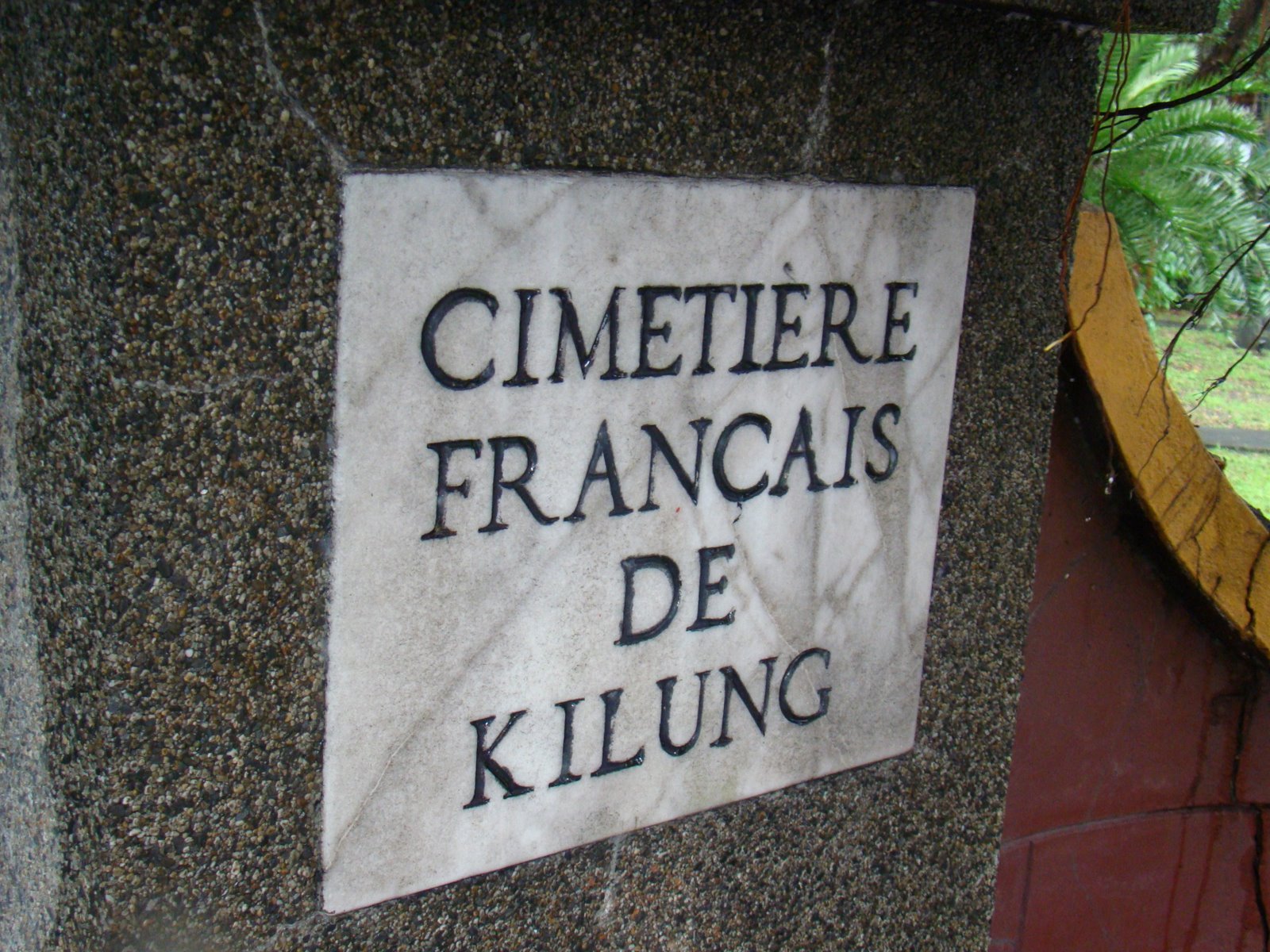
Shortly after the evacuation of Kelung by the French, their cemetery was attacked during the night, and the monuments and wooden crosses were thrown down. Happening to see Liu Ming-ch'uan on the 14th instant, I spoke to him about the outrage and said the French would be sure to be very angry if they heard of it. I advised that he should cause repairs to be made. He replied that he had been told of the occurrence, and had given orders for the cutting in stone of a protective proclamation, a copy of which he showed to me. He added that he had already ordered the tombstones to be put up again, and asked whether I had not heard that his orders had been carried out, to which I could only reply that I had not. The repairs were begun only on the 18th, soldiers being employed for the purpose; but the tombstones were thrown down again during the night. I was in Kelung on the 26th and 27th and visited the Cemetery. The proclamation cut in stone was not there, nor was it on the spot on paper. Two or three of the monuments had been fairly handsome ones and it was sad to see the top portions of them lying broken off. Many of the wooden crosses had been removed, and thin bamboo ones put in their place.

On the 2nd of July the S.S. "Foochow" took a portion of the garrison away from Tamsuy to Taiwanfoo. Some of the hillmen have been disbanded. To prevent disturbances they were marched into the hills and embodied till their monthly pay was due. General Sun changed his residence to Bangka on the 25th instant; and a portion of the Tamsuy force has been sent to Kantow. The torpedoes that were sunk in the entrance to the harbour have been raised, but three or four cannot apparently be found. The land torpedoes have also been dug up. The wires of the submarine ones show much damage. The sunken junks have not been removed but they do not seem to be much in the way of vessels.

[portions omitted here]

Liu Ming-ch'uan wondering at the delay of the French in evacuating the Pescardores, sent General Wu in the Chinese ship of war "Wan Nin Ching" off on the 14th instant to learn the reason. She returned on the 26th. According to her Captain, Admiral Lespes was waiting for a letter from the French Minister. While the "Wan Nin Ching" was at Port Makung the letter arrived, and the evacuation shortly afterwards commenced. One French vessel was left behind to pick up a missing torpedo. The "Wan Nin Ching" on her return to Tamsuy brought the Acting Taotai of Taiwanfoo to conduct the annual literary examinations of this district.

[portions omitted here]

The matter of compensation for the destruction of the mission chapels is being gone into. Dr. Mackay has been away for severl days visiting the chapel sites in company with deputies of the officials.

The payment of a portion of the claim of Douglas Laprail Co. for the destruction of their steam launch near Paksa Point has been offered by the leading men of the neighbourhood. Separate reports about these compensation cases will be duly made by me to you.

Admiral Sir William Dowell visited Tamsuy in H.M's. S'Andrews on the 18th instant.

Your obedient servant,

(Signed) A Frater
Consul

Alexander Frater was based in 紅毛城the Red Fort [Fort San Domingo] in Danshui. The above was just one of his numerous reports. All the major end-games are described in detail in this dispatch: Danshui Harbor pilot Bentley (aka Carozzi) finally went back home to England; all the mines were cleared from Danshui; Dr Mackay was seeking, and eventually received, compensation for his losses; the French departed from Peng-hu; and the warship Wan Nin Ching was in service again. The vandalized French Cemetery in Keelung (image at top) was not kept up until after the Japanese colonized Taiwan in 1895.

[Source of Frater's reports kindly provided by Patrick Cowsill].

2011年5月1日 星期日

The Hunan Braves - 湖南勇

First, an update from Fung-yin:

自由時報, Liberty Times in Taiwan, reported on September 16, 2009, the potential loss of 2-3,000 precious pieces of historical artifacts:

"紀榮達說,這些文物雖然看起來不起眼,但每件都代表著一段歷史,例如其中有塊清同治年間即設立在省道台二線上的墓碑,該地點正是當年中法戰爭,法國指揮官遭處決之地,因此墓碑可說是這場戰事的見證,後來道路拓寬,竟未再復原。"
"Mr Ji Rong-Da [of Tamkang University] states that even though these artifacts may not look appealing, each one actually represents a part of the history. An example is a tombstone erected in Tong-zi era (1856-75) located on Highway No 2 on the same spot where one French commander was executed in the Sino-French War. This headstone was a silent witness to this battle. Unfortunately, after the highway construction, the stone was never restored."

The "French commander" was apparently Lt Fontaine. We now suspect that this location was also where the 17 French Fusiliers marins were interred. John Dodd did report that they were entombed in the "Downs", i.e., on or near the Danshui Golf Course. And Alexander Frater, the British Consul in Danshui, also mentioned in his reports that the French were buried by International Officer Li at $4 apiece. [Frater info kindly provided by Patrick Cowsill.]

Very little is known about the lives of General Sun Kai-Hua's men, members of the Xiang Army湘軍. According to Frater, 200 of these soldiers were killed and wounded in the Battle of Fisherman's Wharf [the Chinese version put it at 80 dead and 200 wounded]. The wounded each was injured in two or three places testifying to their bravery. Indeed, they were known to the locals as the Hunan Braves湖南勇 - Hunan was where they came from and 勇 has dual meaning, soldier or brave. There are 4 sites in Danshui known to be associated with these gentlemen:

(1) The ancient graves of 湖南勇: This grave site is located at the junction of Chung Cheng East Road and Gang-zen No 2 Street竿蓁二街. There were 6 soldiers, 5 of them from 湖南善化縣: 李有章, 袁致和, 張月升, 胡芳之, and 嚴洪勝, and the 6th 李佑銓 [left] was from 永定縣. They followed General Sun from Hunan to fight the Aborigines elsewhere in Taiwan and were buried in 1881 before the Sino-French war.

(2) In 1979, in an expansion project of the Danshui Golf Course, an old cemetery [the Second Public Cemetery] was cleared to make room. This cemetery contained a mass grave and 200 ancient tombs (dating back 300-400 years). Among them, 31 were identified to be 湖南勇 from 長沙府寗鄉縣 and 29 might have died in the Battle of Fisherman's Wharf [their gravestones were dated 光緒十 or 十一年 (1884 or 1885)].

(3) Across the Danshui River in Bali, in the northern shore village of 頂罟村, there is a 大營公廟 built in 1943 next to the burial ground of an unknown number of 湖南勇 who died from illnesses in ca 1884. It was renovated in 1979 [below] and adjacent to the temple now is an Army Camp.

[Source: 米倉國小 - 蘇秋金 and 林婉蓉]

(4) Danshui 大庄萬善堂: Part of this temple was dedicated by the Danshui Golf Club to honor the 湖南勇 after the removal of their graves from a construction site. There are two headstones [below] inscribed with:

湖南甯鄉縣故勇 黃福堂墓 光緒十五年立 [1889]
湖南故考甫正元 蔣公蘭亭之佳城 光緒十九年立 [1893]

They were probably those who chose to settle in Danshui after the Battle, instead of going back to Hunan, and died later from other causes.
Preservation of the past is not yet a priority in the rapidly expanding Danshui. This will soon change. The establishment of a Peace Memorial in Tamsui Peace Park will now lead the way.

2011年4月25日 星期一

Where were the French?

In an exhaustive search, Fung-yin has found a report dated September 16, 1895, from the Chief of Taipei County 田中綱常 (1842-1903) to the first Governor General of Taiwan 樺山資紀 (1837-1922). It indicated that while French graves were found in Keelung, there was no trace of them in Danshui. This was apparently in response to an inquiry from the French Government, 11 years after the Sino-French War.

The burial did take place on Oct 8th (or 9th), 1884 and again on Oct 11th, somewhere in Danshui, but not in the Foreigners' Cemetery. John Dodd reported in his book (1888) that on Feb 24, 1885: "It is reported that the Chinese have found the head of the French officer who fell on the Downs in the engagement of the 8th October last. The head was buried at Banca; the body on the Downs, it is supposed." If true, this would have been Lt Fontaine. The "Downs" was near Danshui Golf Course and Banca is now Wan-hua.

So the exact whereabouts of the 17 French marines who died in the Battle of Fisherman's Wharf remain unknown.

We will continue searching.

2011年4月3日 星期日

Dutchmen in Tainan

In Koxinga's time, Baxemboy北汕尾(or 北線尾) was a sandbar directly across a narrow channel from Ft Zeelandia. It was where the Dutch infantrymen were annihilated by Koxinga's Iron Man Corps (see previous post: here).

Through the years, the geological changes have greatly altered this area. Initially, the Tai Bay, later the 四草湖, was deep enough for large ships to enter and anchor off Anping. In 1906, the sandy deposits from a huge flood cut off the lake from the sea rendering it nautically useless.

In the Baxemboy area, now known as 四草Shi-chau, a 大眾廟 [Temple of the Public] was built. In 1971, when the temple was being re-constructed, more than 100 sets of skeletal remains with 30+ intact skulls were uncovered. Local legends had long held that this area was an ancient battlefield and a burial ground. And that some of the remains were those of the Dutch soldiers. Indeed, some of the recovered leg bones appeared to be longer than that of the average Han man, suggesting a Caucasian origin.

[Above: the 四草大眾廟]

These bones were carefully cleaned, collected, and stored in large pottery jars in a concrete vault:

[The sign indicates the "Tomb of the Dutch"; these and the picture of the monument below are all from http://www.ttvs.cy.edu.tw/kcc/9310fr/ta5.htm]

And in 2001, a stone monument "海靈佳城" (below) was erected to mark the discovery of the remains. The inscription explains that the skeletons were probably of mixed ancestries. The designation of the Tomb of the Dutch was actually tentative.


On Jan 23, 2003, former PM of the Netherlands, Dr Andreas van Agt visited the tomb following up on a formal invitation. He was very proud that his fore-bearers were brave enough to venture this far from home; although he was also saddened at the same time that these brave souls had lost their lives. He also proposed further study for a historically accurate manner of honoring and interring the skulls and bones. Dr van Agt in fact has paid a second visit on May 31, 2006.


Between Nov 18-29, 2002, an extensive anthropological/biometric examination of the skulls (33 males and 2 females - see one of them above) was performed. It was concluded, and reported in April, 2006, that they were of Southern Island (21) and East Asian (14) origin with none European. The researchers, however, also pointed out that the sample size was small, that DNA analysis would be a better approach, and more important, that the results still could not rule in or out the presence of Dutch bones in the collection.

No additional studies were carried out since.