2011年5月19日 星期四

Frater's report on July 1, 1885


The following is transcribed from a hand-written report filed by British Consul Alexander Frater describing the end of the Sino-French war in Taiwan:

State of affairs in North Formosa

H.B.M's Consulate,
Tamsuy, 01st July, 1885

Sir,

My last report on the state of affairs in North Formosa was dated the 20th ultimo; and I now proceed to relate the occurrences since then. I have already acquainted you with some of them in private letters.

The British subject, Purse, that served as a gunner in the Chinese Army was sent away on the 26th of June to the mainland. His behaviour had not been good, and Liu Ming-chu'an was glad to get rid of him. He went, I believe, from Amoy to Shanghai. The British pilot, Bentley, who took service with the French left with them when they quitted Kelung, and has gone on to England.

Eight of the deserters from the French army were sent away on the 26th instant on the S.S. "Fokien". Their destination was Hong Kong. Liu Ming-Ch'uan gave each of them $100 (including $25, the value of the passage ticket) as a parting gift. There are seven others in the hands of the Chinese. One of them is employed as a drill instructor and another acts as attendant to Dr Luscher, for whom, by the way Liu Ming-ch'uan is going to build a military hospital. [Note: Luscher was an American M.D. hired by Liu Ming-ch'uan to start a surgical service in the military.]

After the French left Kelung, Liu Ming-ch'uan, knowing that many of the inhabitants had had their houses destroyed by the French appointed a Compassionate Committee to distribute funds among such, and also among persons whose relatives had been killed by the enemy. A proclamation of the 24th of June calls for applications within 20 days. A public notice, of the same date, by the two Imperial Commissioners Liu Ming-ch'uan and Yang Yo-jun invites Chinese to return to Kelung, grants an amnesty to persons who had worked or acted as linguists for the French, provided they had not helped to injure the natives or looted or killed, and gives liberty for the arrest forthwith of anyone found seizing the land or goods of another.

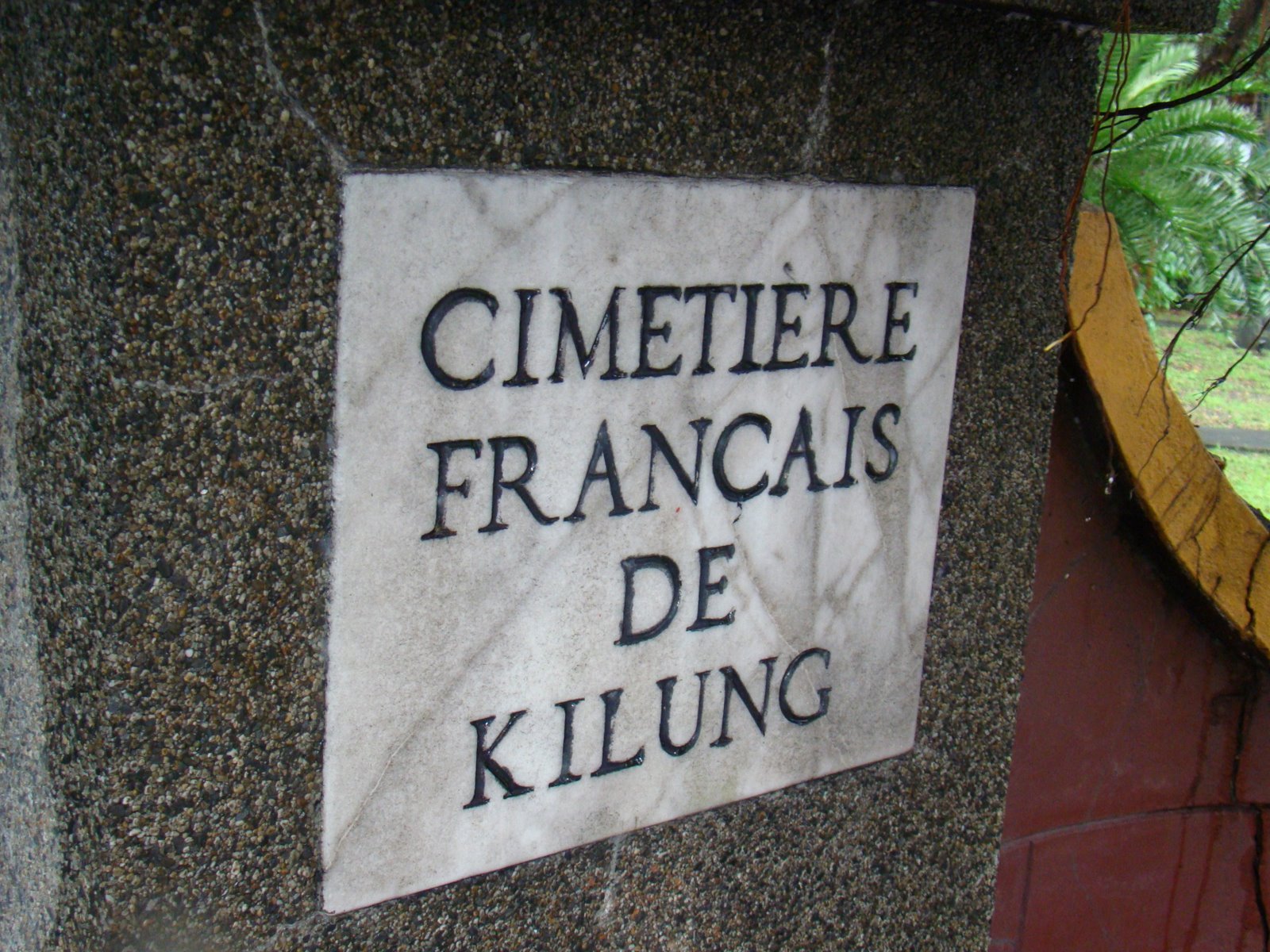
Shortly after the evacuation of Kelung by the French, their cemetery was attacked during the night, and the monuments and wooden crosses were thrown down. Happening to see Liu Ming-ch'uan on the 14th instant, I spoke to him about the outrage and said the French would be sure to be very angry if they heard of it. I advised that he should cause repairs to be made. He replied that he had been told of the occurrence, and had given orders for the cutting in stone of a protective proclamation, a copy of which he showed to me. He added that he had already ordered the tombstones to be put up again, and asked whether I had not heard that his orders had been carried out, to which I could only reply that I had not. The repairs were begun only on the 18th, soldiers being employed for the purpose; but the tombstones were thrown down again during the night. I was in Kelung on the 26th and 27th and visited the Cemetery. The proclamation cut in stone was not there, nor was it on the spot on paper. Two or three of the monuments had been fairly handsome ones and it was sad to see the top portions of them lying broken off. Many of the wooden crosses had been removed, and thin bamboo ones put in their place.

On the 2nd of July the S.S. "Foochow" took a portion of the garrison away from Tamsuy to Taiwanfoo. Some of the hillmen have been disbanded. To prevent disturbances they were marched into the hills and embodied till their monthly pay was due. General Sun changed his residence to Bangka on the 25th instant; and a portion of the Tamsuy force has been sent to Kantow. The torpedoes that were sunk in the entrance to the harbour have been raised, but three or four cannot apparently be found. The land torpedoes have also been dug up. The wires of the submarine ones show much damage. The sunken junks have not been removed but they do not seem to be much in the way of vessels.

[portions omitted here]

Liu Ming-ch'uan wondering at the delay of the French in evacuating the Pescardores, sent General Wu in the Chinese ship of war "Wan Nin Ching" off on the 14th instant to learn the reason. She returned on the 26th. According to her Captain, Admiral Lespes was waiting for a letter from the French Minister. While the "Wan Nin Ching" was at Port Makung the letter arrived, and the evacuation shortly afterwards commenced. One French vessel was left behind to pick up a missing torpedo. The "Wan Nin Ching" on her return to Tamsuy brought the Acting Taotai of Taiwanfoo to conduct the annual literary examinations of this district.

[portions omitted here]

The matter of compensation for the destruction of the mission chapels is being gone into. Dr. Mackay has been away for severl days visiting the chapel sites in company with deputies of the officials.

The payment of a portion of the claim of Douglas Laprail Co. for the destruction of their steam launch near Paksa Point has been offered by the leading men of the neighbourhood. Separate reports about these compensation cases will be duly made by me to you.

Admiral Sir William Dowell visited Tamsuy in H.M's. S'Andrews on the 18th instant.

Your obedient servant,

(Signed) A Frater
Consul

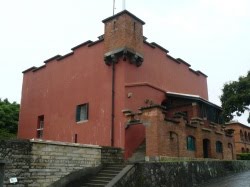
Alexander Frater was based in 紅毛城the Red Fort [Fort San Domingo] in Danshui. The above was just one of his numerous reports. All the major end-games are described in detail in this dispatch: Danshui Harbor pilot Bentley (aka Carozzi) finally went back home to England; all the mines were cleared from Danshui; Dr Mackay was seeking, and eventually received, compensation for his losses; the French departed from Peng-hu; and the warship Wan Nin Ching was in service again. The vandalized French Cemetery in Keelung (image at top) was not kept up until after the Japanese colonized Taiwan in 1895.

[Source of Frater's reports kindly provided by Patrick Cowsill].

2011年5月1日 星期日

The Hunan Braves - 湖南勇

First, an update from Fung-yin:

自由時報, Liberty Times in Taiwan, reported on September 16, 2009, the potential loss of 2-3,000 precious pieces of historical artifacts:

"紀榮達說,這些文物雖然看起來不起眼,但每件都代表著一段歷史,例如其中有塊清同治年間即設立在省道台二線上的墓碑,該地點正是當年中法戰爭,法國指揮官遭處決之地,因此墓碑可說是這場戰事的見證,後來道路拓寬,竟未再復原。"
"Mr Ji Rong-Da [of Tamkang University] states that even though these artifacts may not look appealing, each one actually represents a part of the history. An example is a tombstone erected in Tong-zi era (1856-75) located on Highway No 2 on the same spot where one French commander was executed in the Sino-French War. This headstone was a silent witness to this battle. Unfortunately, after the highway construction, the stone was never restored."

The "French commander" was apparently Lt Fontaine. We now suspect that this location was also where the 17 French Fusiliers marins were interred. John Dodd did report that they were entombed in the "Downs", i.e., on or near the Danshui Golf Course. And Alexander Frater, the British Consul in Danshui, also mentioned in his reports that the French were buried by International Officer Li at $4 apiece. [Frater info kindly provided by Patrick Cowsill.]

Very little is known about the lives of General Sun Kai-Hua's men, members of the Xiang Army湘軍. According to Frater, 200 of these soldiers were killed and wounded in the Battle of Fisherman's Wharf [the Chinese version put it at 80 dead and 200 wounded]. The wounded each was injured in two or three places testifying to their bravery. Indeed, they were known to the locals as the Hunan Braves湖南勇 - Hunan was where they came from and 勇 has dual meaning, soldier or brave. There are 4 sites in Danshui known to be associated with these gentlemen:

(1) The ancient graves of 湖南勇: This grave site is located at the junction of Chung Cheng East Road and Gang-zen No 2 Street竿蓁二街. There were 6 soldiers, 5 of them from 湖南善化縣: 李有章, 袁致和, 張月升, 胡芳之, and 嚴洪勝, and the 6th 李佑銓 [left] was from 永定縣. They followed General Sun from Hunan to fight the Aborigines elsewhere in Taiwan and were buried in 1881 before the Sino-French war.

(2) In 1979, in an expansion project of the Danshui Golf Course, an old cemetery [the Second Public Cemetery] was cleared to make room. This cemetery contained a mass grave and 200 ancient tombs (dating back 300-400 years). Among them, 31 were identified to be 湖南勇 from 長沙府寗鄉縣 and 29 might have died in the Battle of Fisherman's Wharf [their gravestones were dated 光緒十 or 十一年 (1884 or 1885)].

(3) Across the Danshui River in Bali, in the northern shore village of 頂罟村, there is a 大營公廟 built in 1943 next to the burial ground of an unknown number of 湖南勇 who died from illnesses in ca 1884. It was renovated in 1979 [below] and adjacent to the temple now is an Army Camp.

[Source: 米倉國小 - 蘇秋金 and 林婉蓉]

(4) Danshui 大庄萬善堂: Part of this temple was dedicated by the Danshui Golf Club to honor the 湖南勇 after the removal of their graves from a construction site. There are two headstones [below] inscribed with:

湖南甯鄉縣故勇 黃福堂墓 光緒十五年立 [1889]
湖南故考甫正元 蔣公蘭亭之佳城 光緒十九年立 [1893]

They were probably those who chose to settle in Danshui after the Battle, instead of going back to Hunan, and died later from other causes.
Preservation of the past is not yet a priority in the rapidly expanding Danshui. This will soon change. The establishment of a Peace Memorial in Tamsui Peace Park will now lead the way.

2011年4月25日 星期一

Where were the French?

In an exhaustive search, Fung-yin has found a report dated September 16, 1895, from the Chief of Taipei County 田中綱常 (1842-1903) to the first Governor General of Taiwan 樺山資紀 (1837-1922). It indicated that while French graves were found in Keelung, there was no trace of them in Danshui. This was apparently in response to an inquiry from the French Government, 11 years after the Sino-French War.

The burial did take place on Oct 8th (or 9th), 1884 and again on Oct 11th, somewhere in Danshui, but not in the Foreigners' Cemetery. John Dodd reported in his book (1888) that on Feb 24, 1885: "It is reported that the Chinese have found the head of the French officer who fell on the Downs in the engagement of the 8th October last. The head was buried at Banca; the body on the Downs, it is supposed." If true, this would have been Lt Fontaine. The "Downs" was near Danshui Golf Course and Banca is now Wan-hua.

So the exact whereabouts of the 17 French marines who died in the Battle of Fisherman's Wharf remain unknown.

We will continue searching.

2011年4月3日 星期日

Dutchmen in Tainan

In Koxinga's time, Baxemboy北汕尾(or 北線尾) was a sandbar directly across a narrow channel from Ft Zeelandia. It was where the Dutch infantrymen were annihilated by Koxinga's Iron Man Corps (see previous post: here).

Through the years, the geological changes have greatly altered this area. Initially, the Tai Bay, later the 四草湖, was deep enough for large ships to enter and anchor off Anping. In 1906, the sandy deposits from a huge flood cut off the lake from the sea rendering it nautically useless.

In the Baxemboy area, now known as 四草Shi-chau, a 大眾廟 [Temple of the Public] was built. In 1971, when the temple was being re-constructed, more than 100 sets of skeletal remains with 30+ intact skulls were uncovered. Local legends had long held that this area was an ancient battlefield and a burial ground. And that some of the remains were those of the Dutch soldiers. Indeed, some of the recovered leg bones appeared to be longer than that of the average Han man, suggesting a Caucasian origin.

[Above: the 四草大眾廟]

These bones were carefully cleaned, collected, and stored in large pottery jars in a concrete vault:

[The sign indicates the "Tomb of the Dutch"; these and the picture of the monument below are all from http://www.ttvs.cy.edu.tw/kcc/9310fr/ta5.htm]

And in 2001, a stone monument "海靈佳城" (below) was erected to mark the discovery of the remains. The inscription explains that the skeletons were probably of mixed ancestries. The designation of the Tomb of the Dutch was actually tentative.


On Jan 23, 2003, former PM of the Netherlands, Dr Andreas van Agt visited the tomb following up on a formal invitation. He was very proud that his fore-bearers were brave enough to venture this far from home; although he was also saddened at the same time that these brave souls had lost their lives. He also proposed further study for a historically accurate manner of honoring and interring the skulls and bones. Dr van Agt in fact has paid a second visit on May 31, 2006.


Between Nov 18-29, 2002, an extensive anthropological/biometric examination of the skulls (33 males and 2 females - see one of them above) was performed. It was concluded, and reported in April, 2006, that they were of Southern Island (21) and East Asian (14) origin with none European. The researchers, however, also pointed out that the sample size was small, that DNA analysis would be a better approach, and more important, that the results still could not rule in or out the presence of Dutch bones in the collection.

No additional studies were carried out since.

2011年3月30日 星期三

Tamsui Peace Park (TPP)

Announcement

The 和平公園Peace Park in Danshui is now open to the public:


Please come and visit.

This Peace Park will commemorate the war dead, friend and foe alike, from Danshui's past.

2011年3月16日 星期三

Tsunami津波 hit northeast Japan

News reports on March 22 show that the 1000-year old 長命穴Longevity Cave - one pass adds three years to your life - has collapsed.

[One of the 260 islets in Matsushima before the tsunami; now most islets and pine trees have been decimated]

On March 11, at 2:47PM local time, Japan is struck by the largest recorded earthquake in its history off the coast of the northeastern city of Sendai [9.0 on the Richter scale]. It surpasses the previously largest 宝永地震 in 1707 [Magnitude 8.6]. Minutes later, the coastal areas were devastated by a huge tsunami津波.

The same epicenter has acted up before, in 869AD [貞観11年] [see the red rectangle in the diagram above]. The tsunami had also left markings in the inland areas.

Matsushima松島, near 仙台市Sendai City, in Miyagi-ken, is one of the three major sights in Japan. Legend has it that the well-traveled poet Matsuo Basho [松尾芭蕉, 1644 – November 28, 1694] was at loss for words, totally captured by its beauty when he first visited it. He left behind an unfinished haiku: Matsushima ya aaa Matsushima ya Matsushima ya松島や ああ松島や 松島や.

News reports now indicate that the Matsushima Bay was somewhat spared; although East Matsushima appeared to have been hit hard by the tsunami (see photo below taken at 8:58AM on March 12 by a reporter):
Unfortunately, the short Togetsu Bridge渡月橋 linking Oshima雄島 has now vanished; the 252-m red bridge to 福浦島Fukuura Island - the Fukuura Bridge福浦橋 above - is most likely also damaged.

And 瑞巌寺Zui-gan-ji, a national treasure built in 1604-9 by Lord Date Masamune伊達政宗, has been turned into a temporary shelter for some 300 stranded tourists who were later evacuated to Sendai. The temple itself sustained some minor damages. The entry way to the temple is covered by mud, however.

The counterpart of the tastiest oyster that has long disappeared from Danshui can still be found in Matsushima; although after the tsunami, the fate of the famed 松島牡蠣Matsushima kaki, cultivated in the bay remains unclear; the exports seem to have stopped for now.
[Above: the oyster beds and below: THE oyster]
This natural disaster has wreaked havoc in the northeast Japan where entire villages and towns were claimed by the sea. The Fukushima power plant nuclear reactors are still out of control. With 50 heroic workers on the job, that too will end soon, one way or the other. The journey of recovery will be a long and hard one; yet fully recover it certainly will.

Good luck and Godspeed.

2011年3月5日 星期六

Dutch presence in Danshui

[Santo Domingo, 1170 – August 6, 1221]

Visitors to the Ft San Domingo紅毛城 in Danshui will know that it was initially built by the Spaniards in 1628. The name was in honor of Saint Dominic, founder of the Friars Preachers [the Order of Preachers (OP)], commonly known as the Dominicans. It was later re-built by the Dutch (finishing in 1646) and re-named Ft Anthonio. The fortress was subsequently repaired and occasionally maintained throughout the Ming-Cheng dynasty and the Qing era. The Brits then leased it from the Qing in perpetuity in 1867/8 and the original name in Spanish was officially retained. To the locals, however, the fortress is always the 紅毛城 [literally City of the Red-haired].

On Aug 21, 1642, the Dutch, after an unsuccessful try one year earlier, attacked the Spanish stronghold Ft San Salvador [located on Palm Island or 社寮島, now 和平島] in Keelung again with 690 soldiers on board of 5 galleons and 2 junks. The Spaniards capitulated after 5 days of intense fighting. Keelung was then ruled by Colonial Governor Hendric Harconse and its garrison commanded by Lt Kriec Kenheecq. The Dutch fortified Ft San Salvador and christened it Ft Noort Hollant [North Holland]. Soon after, 50 soldiers were left to guard the fortress with another 80 dispatched to occupy Danshui. In Feb, 1644, in an attempt to conquer the Senar Tribe in Danshui [in the area now 中興里 and 鄧公里] and other Aboriginal tribes in the region, Lt Kenheecq staged a show of force that, however, had backfired resulting in the loss of 21 Dutch soldiers and 49 Han and Aboriginal mercenaries. Kenheecq was replaced by Captain Pieter Boon who arrived from Tayouan [Tainan] with construction materials and laborers to reinforce Ft Anthonio. This was quickly aided by the arrival of 7 war ships with 300 Dutch soldiers and 10 Han mercenaries on board. And after two months of battles, except the Senar tribe, most other tribes in Danshui, Keelung and Ilan submitted to the Dutch rule and were forced to pay enormous annual tributes.

In 1661, Koxinga succeeded in driving out the Dutch from Taiwan; the latter, however, had never accepted the defeat. In 1664, they actually returned to the undefended Keelung to re-build the fortress, arm it with 24 guns, and guard it with 240 men.

In 1665, Cheng Jing鄭經 (1642-81), Koxinga's son and heir, sent a naval force from Tainan to take Keelung. The Dutch responded by increasing the defense stationed in Ft North Holland (to 387 men by 1667). However, with the trade with Foochow cut off by the Qing, the hostility of the locals owing to years of ruthless Dutch rule, and the difficulties in re-supplying from Batavia, the Dutch finally gave up and retreated to their home base in Indonesia in Oct, 1668. Min-Cheng General Huang-An黃安 led a joint navy-army force to Danshui and took over Ft Anthonio. The presence of the Dutch in Danshui/Taiwan finally came to an end. By 1669, the whole northern Taiwan came under the control of the Tung-Ning Kingdom.

In 1681, Ming-Cheng General He-You何祐, based on 紅毛城, was charged with the defense of Keelung and Danshui who, in the end, yielded the command to the Qing in 1683.

Danshui then became increasingly dominated by Han immigrants arriving mostly from Hokkien.